
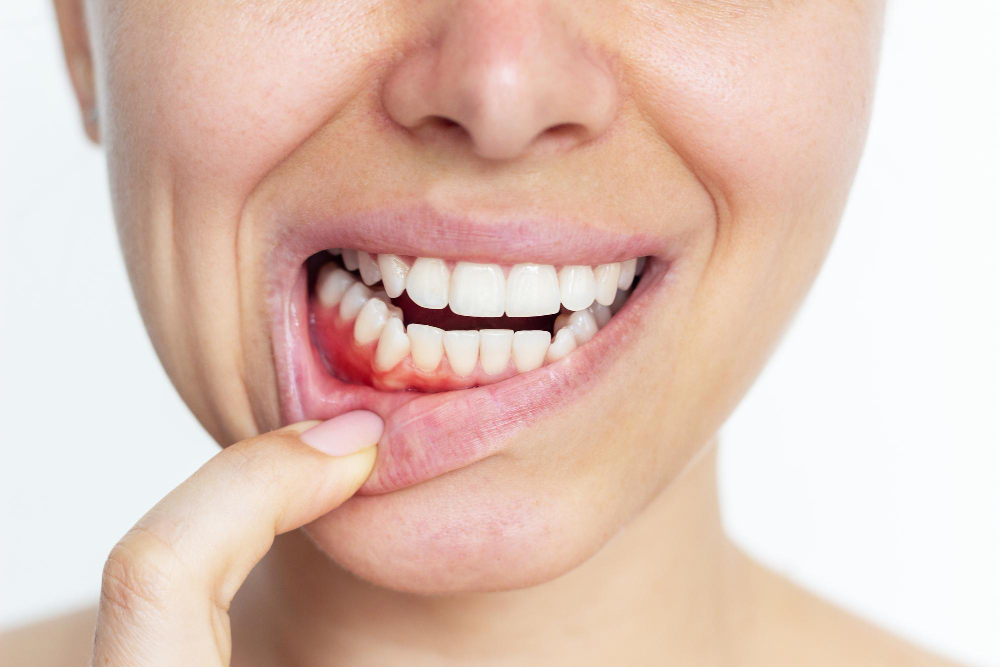
Gum inflammation and bleeding are common dental problems. Many people notice their gums bleed when brushing or flossing. This can be a sign of gum disease or poor oral hygiene. Healthy gums are important for strong teeth and a bright smile. If you ignore gum inflammation and bleeding, it can lead to serious dental issues. Early care helps prevent tooth loss and keeps your mouth healthy.
What is Gum Inflammation & Bleeding?
Gum inflammation means your gums are red, swollen, or sore. Bleeding gums often happen when you brush or floss. These signs show your gums are not healthy. Usually, this is the first stage of gum disease, called gingivitis. If left untreated, it can become periodontitis, a more serious problem. Good oral hygiene can help stop gum inflammation and bleeding.
Common Symptoms
It is important to notice early signs of gum problems. Early treatment can prevent bigger issues. Watch for these symptoms:
If you notice any of these, see your dentist soon.
Main Causes
Many things can cause gum inflammation and bleeding. However, poor oral hygiene is the most common reason. Here are some main causes:
Because many causes are preventable, good habits make a big difference.
How is it Diagnosed?
Your dentist can diagnose gum inflammation and bleeding during a dental checkup. First, they will look at your gums for redness, swelling, or bleeding. Next, they may use a small tool to check for pockets between your teeth and gums. Sometimes, X-rays help show if bone loss has started. Early diagnosis helps stop the problem from getting worse. Regular dental visits are key for healthy gums.
Treatment Options
Treating gum inflammation and bleeding depends on how serious it is. For mild cases, better oral hygiene may be enough. For more severe cases, your dentist may suggest:
Always follow your dentist’s advice for the best results.
Prevention Tips
Preventing gum inflammation and bleeding is easier than treating it. Try these simple tips:
With these habits, you can keep your gums healthy.
Lifestyle and Home Care Guidance
Besides regular dental care, your daily habits matter. For example, choose a toothbrush with soft bristles. Hard brushing can hurt your gums. Replace your toothbrush every three months. If you wear dentures, clean them well every day. Drink plenty of water to wash away food and bacteria. If you have health conditions like diabetes, keep them under control. Good habits at home support your dental care from the clinic.
In summary, gum inflammation and bleeding are warning signs. Do not ignore them. Early care and good habits can protect your smile. Consult a dentist at Dr. Naren N Dental for personalized advice on gum inflammation and bleeding.